
Chemical peels have been part of professional skin care for decades, and for good reason. When applied correctly by an experienced clinician, a peel can do things that no at-home skincare product can replicate: accelerating cell turnover, fading pigmentation, clearing congestion, softening fine lines, and leaving the skin noticeably clearer, smoother, and more luminous after just a single session.
Yet for many people, the words “chemical peel” still conjure images of red, peeling skin and weeks of hiding indoors. That perception is largely outdated. Modern clinical peels range from gentle lunchtime treatments with no visible downtime to more intensive resurfacing sessions, and knowing which one is appropriate for your skin is the difference between a treatment that delivers real results and one that leaves you disappointed or, worse, with skin that has been pushed too hard.
At Sharon MediSkin Clinic at Castlereagh, Sydney, peel treatments are one of our most popular and consistently effective services. In this post, we want to give you a straightforward, honest guide to what chemical peels actually do, the different types available, what to expect from a session at our clinic, and how to work out which option is right for your skin and your goals.
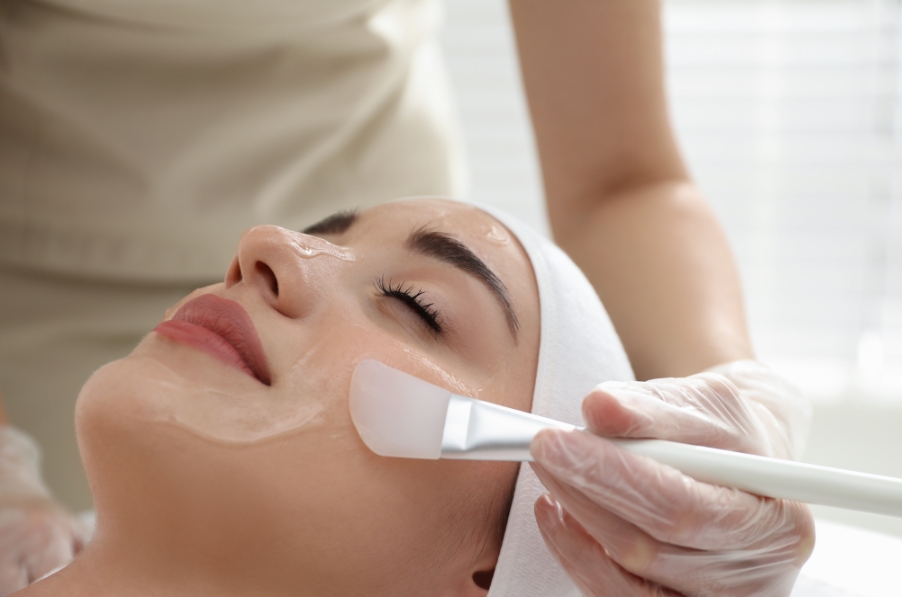
The term “chemical peel” refers to the application of an active solution to the skin that causes controlled exfoliation of the outer skin layers. By removing this outermost layer of dull, dead, and damaged cells, the treatment reveals the fresher, healthier skin beneath and triggers the skin’s natural renewal process.
Depending on the depth of the peel, this renewal process can address:
The active ingredients used in clinical peels, most commonly acids such as glycolic, salicylic, lactic, mandelic, or a combination of these, work by loosening the bonds between skin cells at a specific depth. The skin then sheds these cells naturally over the days following treatment, revealing a renewed surface beneath.
The depth of this process depends on the type of acid used, its concentration, the number of layers applied, and the amount of time it is left on the skin. At Sharon MediSkin Clinic, every peel is customised and closely monitored throughout the session to ensure the right depth and response for your specific skin type.
Not all peels are the same, and the variety of options available is one of the reasons so many skin concerns respond well to peel treatments when the right formulation is chosen.
Glycolic acid is derived from sugar cane and belongs to the alpha-hydroxy acid (AHA) family. It has a small molecular size that allows it to penetrate the skin effectively, making it one of the most widely used acids in clinical peeling treatments.
Glycolic peels are particularly effective for:
They work well for most skin types and are often the go-to starting point for clients new to professional peel treatments. The sensation during application is a mild tingling or warmth, and most clients experience minimal to no visible peeling, particularly at lower concentrations.
Salicylic acid is a beta-hydroxy acid (BHA) and is oil-soluble, meaning it can penetrate into the pore lining rather than working only on the skin surface. This makes it uniquely effective for oily and acne-prone skin.
Salicylic peels are particularly effective for:
If your primary concern is acne or oily skin alongside pigmentation or texture issues, a salicylic peel, or a combination formula incorporating both salicylic and glycolic acid, is often the most logical choice.
Lactic acid is another AHA, derived from milk, but with a larger molecular size than glycolic acid. This means it works more slowly and more gently at the skin surface, making it an excellent option for sensitive skin or clients who are new to peeling treatments and want to start cautiously.
Lactic peels are particularly effective for:
Mandelic acid is an AHA derived from bitter almonds with a particularly large molecular size, making it the most gentle of the common clinical acids. It is also naturally antibacterial, which gives it dual action for acne-prone skin that is too sensitive for salicylic acid.
Mandelic peels are particularly effective for:
At Sharon MediSkin Clinic, many of our most effective peel treatments use a combination of acids or a layered approach, applying different formulations in sequence to address multiple concerns at once. A combination of glycolic and salicylic acid, for example, addresses both surface texture and deep pore congestion simultaneously. Sharon’s experience allows her to read the skin’s response in real time and adjust the application accordingly, which produces more consistent and safer results than a one-size approach.
If you have never had a professional peel before, here is an honest, step-by-step picture of what a session at our clinic looks like.
A single peel session will produce a visible improvement, particularly in terms of brightness and texture. Most clients leave their first session noticing their skin looks cleaner and more luminous than it did before.
For more significant or lasting results, particularly for pigmentation, acne scarring, or textural concerns, a course of peels is recommended. At Sharon MediSkin Clinic, we typically suggest four to six sessions spaced two to four weeks apart, depending on the strength of the treatment and the skin’s response.
Each session builds on the last. The cumulative effect of regular peel treatments produces a progressive improvement in skin tone, clarity, and quality that is clearly visible over the course of a treatment series.
A peel facial treatment is suitable for most skin types and concerns, but there are some situations where we would recommend a different approach or a modified protocol.
Clients who are currently using prescription retinoids or have very active, inflamed acne may need to pause certain products before treatment. Clients with very sensitive or compromised skin barriers may benefit from a preparatory period of skin conditioning before a peel. Clients with darker skin tones require careful selection of acid type and concentration to avoid triggering post-inflammatory hyperpigmentation.
None of these factors means peels are not appropriate for you. They mean that the choice of formulation and the approach taken during treatment needs to be carefully matched to your skin, which is exactly what a consultation at Sharon MediSkin Clinic will determine.
One of the most effective ways to use chemical peel treatments is as part of a broader skin rejuvenation protocol rather than as a standalone treatment. At Sharon MediSkin Clinic, peels are often combined with or sequenced alongside laser treatment for pigmentation, skin needling for acne scarring, or Korean facial treatments for clients working toward glass skin.
A course of peels combined with targeted laser work, for example, addresses both the surface texture and the deeper pigmentation that causes uneven skin tone. The peel prepares and brightens the surface while the laser works on the pigment at a cellular level, producing a more comprehensive result than either treatment achieves on its own.
During your consultation, Sharon will look at your full skin picture and recommend whether a peel treatment on its own is the right starting point, or whether combining it with another modality will give you a faster and more satisfying outcome.
If you have been thinking about a professional peel treatment but were not sure where to start, a consultation at Sharon MediSkin Clinic at Castlereagh gives you the clarity you need before committing to anything.
Sharon will assess your skin, explain exactly which peel formulation is appropriate for your concerns, and give you a realistic picture of what results you can expect and over what timeframe.
Call Sharon MediSkin Clinic today to book your chemical peel consultation in Sydney. With over 26 years of experience in cosmetic and aesthetic medicine, we bring the knowledge and care to every treatment that delivers real, lasting results.