
Melasma is one of the most frustrating skin concerns to treat, and if you have Asian skin, you already know that most clinics get it wrong. The patches come back. Treatments that work for lighter skin tones leave you worse off. And every time you try something new, there is that familiar worry at the back of your mind: what if this makes it darker?
It is a cycle that Sharon Kim, founder of Sharon MediSkin Clinic in Sydney, has seen countless times over 26 years of practice. And it is a big reason she invested in the clinic’s new Pico laser machine.
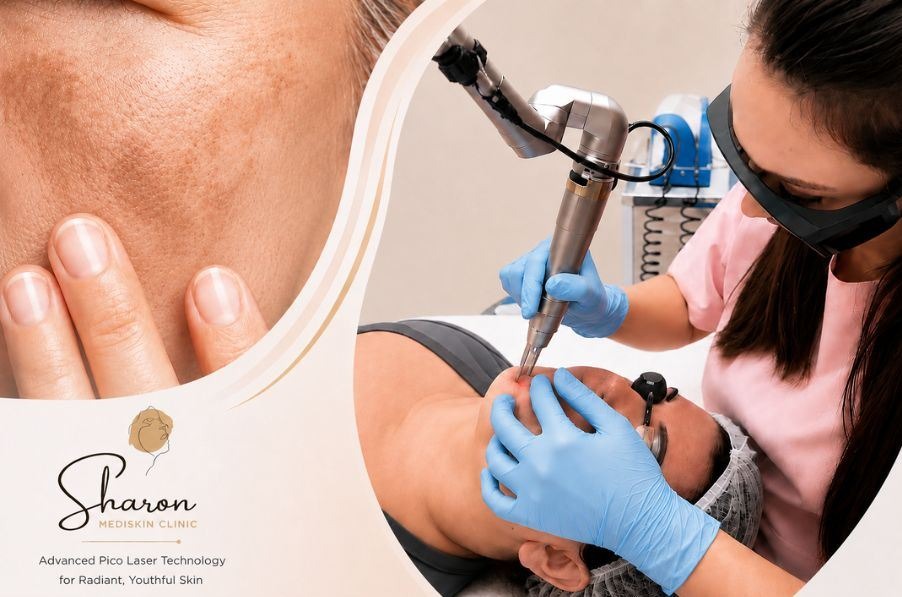
Melasma is a form of hyperpigmentation triggered by UV exposure, hormonal shifts, and inflammation. It appears as brown or grey-brown patches across the cheeks, forehead, and upper lip.
For people with Asian skin types (Fitzpatrick types III to V), melasma tends to be more persistent for a specific reason. The melanocytes, the cells responsible for producing pigment, are more reactive in deeper skin tones. They respond strongly to heat, inflammation, and even minor trauma. So treatments that are perfectly safe on fair skin can trigger a rebound response in Asian skin, producing more pigmentation rather than less.
This is why so many Asian women have gone from clinic to clinic with inconsistent results. IPL causes flare-ups. Certain chemical peels deepen the discolouration. Even some lasers marketed for pigmentation can overstimulate melanocytes and leave skin darker than when they started.
Traditional Q-switched lasers were the standard for pigmentation treatment for many years. They use heat-based energy to break down pigment in the skin, and for the right skin type, they work well.
The issue is that heat and melasma on Asian skin are a problematic combination. The thermal energy from older laser systems frequently triggers post-inflammatory hyperpigmentation (PIH), a response where the skin reacts to perceived injury by producing more melanin. For someone already managing melasma, this is the last outcome you want.
These treatments are not bad across the board. They remain effective for a range of skin concerns on lighter skin tones. But for melasma specifically on Asian skin, the thermal risk is real, and many clinics either underestimate it or do not communicate it clearly before treatment.
Pico laser works on a fundamentally different principle. Rather than using heat to destroy pigment, it delivers ultra-short pulses of energy measured in picoseconds (one trillionth of a second). These rapid pulses create a photoacoustic effect, a precise shockwave that shatters pigment particles without generating significant heat in the surrounding tissue.
For Asian skin, this distinction matters. Less thermal energy means a much lower risk of triggering PIH or pushing melasma deeper. The pigment is targeted directly, and the skin around it is largely left alone.
Sharon MediSkin Clinic uses Pico laser treatment in three ways depending on what your skin needs. The toning mode is a gentle full-face treatment suited to overall brightening and uneven skin tone. For more established melasma, multiple wavelengths target pigment at different depths. The fractional setting stimulates collagen production, which is also useful for anyone dealing with acne scarring alongside their pigmentation concerns.
The technology is only part of the story. Who operates it, and how they approach your skin, shapes the result just as much.
Sharon Kim has spent 26 years working with skin, with a focus on Asian skin types throughout her career. Her background in Korean skincare is not just a branding point. In Korea, where the majority of patients have Asian skin and where skincare culture is genuinely sophisticated, treating melanin-rich skin is not a specialisation. It is the baseline. Sharon brings that standard of care to her Sydney clinic.
She also understands that melasma is not a one-session fix. It needs a structured plan, a realistic timeline, and adjustments based on how your skin actually responds session by session. Before any treatment begins, Sharon looks at what is driving your melasma: whether it is hormonal (contraception, recent pregnancy), lifestyle-related (sun exposure, heat), or a combination. Those factors shape what kind of results are achievable and what you need to do between sessions to support the process.
Most clients see meaningful improvement over 3 to 6 sessions, spaced a few weeks apart. Some notice a visible difference after the first treatment, though more significant changes build progressively with each session.
Pico toning sessions come with very little downtime. Mild redness for a few hours is common, and most people carry on with their day without any issue. Treatments targeting deeper pigmentation may involve a slightly longer recovery period, which Sharon will walk you through before you begin.
One thing worth being honest about: melasma is a chronic condition. Pico laser can significantly reduce its appearance and in many cases achieve lasting clarity, but ongoing sun protection is not optional. Without SPF every single day, pigmentation will return regardless of which treatment you use. The aim is not just to fade what is visible now. It is to get your skin into a more stable state so melasma becomes easier to manage over the long term.
Pico laser is one of the few laser treatments considered safe and effective across medium to darker skin tones, including Fitzpatrick types III to V. If you have been told in the past that your skin is too dark for laser, or if a previous treatment made your pigmentation worse, it is worth having a proper assessment. The reduced thermal profile of Pico laser changes the risk picture considerably.
It works well for:
Sharon MediSkin Clinic is located in Sydney CBD at Shop 3, Ground Floor, 265 Castlereagh Street. If you have been managing melasma for years without finding something that works, or you are just beginning to look at your options, a consultation with Sharon is a straightforward starting point.
You will leave with a clear understanding of what is happening with your skin, what Pico laser can realistically achieve for you, and what a treatment plan would look like.
Book your consultation through the website or contact the clinic directly.