
Nobody wakes up one morning and decides they are fine with how their chin looks in photos. It tends to creep up gradually. A camera angle that bothers you. A video call where you notice something you had not quite registered before. The realisation that no matter how much you adjust your posture or tilt your head, it is just there.
And then comes the frustration of trying to fix it the conventional way, eating better, exercising more, and finding that this specific area does not seem to care about any of that.
You are not alone in that experience. A double chin is one of the most common cosmetic concerns we hear about at Sharon MediSkin Clinic, and it affects people across a huge range of body types, ages, and fitness levels. The reason it is so resistant to lifestyle changes is not about discipline. It is about biology. And understanding that makes it a lot easier to think clearly about what can help.
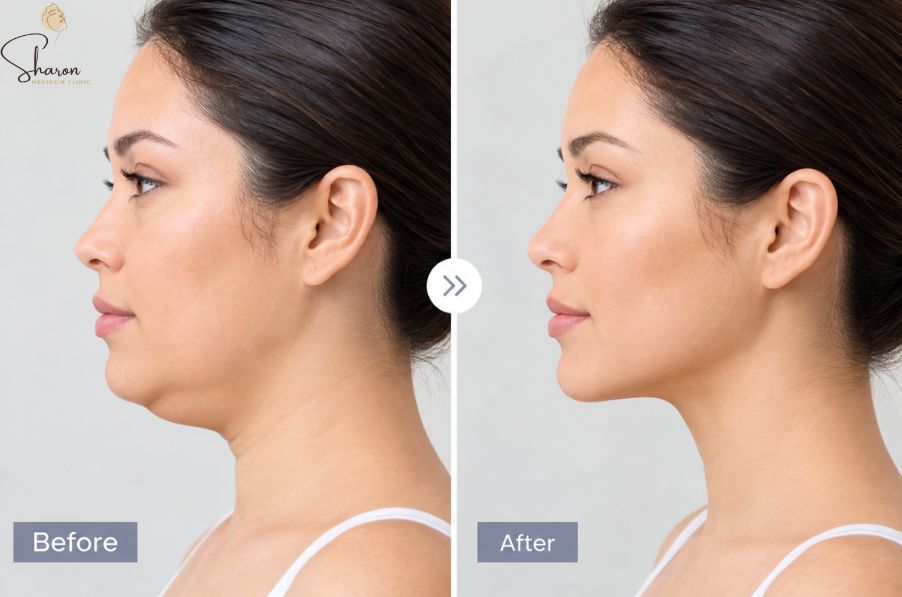
There are a few different things going on, and for most people it is a combination of more than one.
The most obvious factor is submental fat, which is the pocket of fat that sits beneath the chin and above the neck. Some people are simply more genetically predisposed to storing fat in this area, which means it can be present regardless of overall body weight. You can be at your goal weight, exercise regularly, and still have a noticeable submental fat deposit because your genetics decided that is where your body holds fat.
Age plays a significant role as well. As we get older, the skin along the jawline and neck loses elasticity and starts to sag. Even if the amount of fat beneath the chin has not changed, looser skin makes the area look heavier and less defined. This is why a lot of clients notice the chin becoming more of a concern in their 40s even though nothing dramatic has changed in their diet or lifestyle.
Posture and muscle tone matter too, though their effect is often overstated. Spending hours looking down at phones and screens can contribute to a loss of tone in the neck muscles over time, which affects how the chin and neck look overall.
And for some people, it is simply the shape of the jaw and neck they were born with. A naturally recessed chin, for example, makes submental fat more visible because there is less bone structure creating definition between the chin and neck.
Honestly, sometimes partially, and often not much at all.
If a double chin is primarily driven by overall body fat and someone loses a significant amount of weight, the submental area may reduce along with everything else. But if the concern is driven by genetics, skin laxity, bone structure, or a stubborn localised fat deposit, the answer is usually no. People spend months doing targeted neck exercises or following specific diets based on advice they read online and then feel like something is wrong with them when it does not work. Nothing is wrong with them. The approach just does not reach the problem.
This is worth being clear about because it shapes what helps.
There are two main things that professional non-surgical treatment can address in this area: the fat itself, and the skin quality and tightness over it.
For submental fat, non-invasive fat reduction treatments target the fat cells in the area directly, causing them to break down and be naturally cleared by the body over the weeks following treatment. Results build progressively and the change in the chin and neck profile can be meaningful, particularly for clients who have a clearly defined fat deposit rather than general skin laxity.
For skin laxity along the jawline and beneath the chin, radiofrequency and HIFU treatments work by stimulating collagen production in the deeper tissue layers. This produces a gradual tightening and lifting effect along the jawline and neck that improves the definition of the area over time. These are the same technologies used for full-face lifting, just applied with specific attention to the chin and jaw area.
For many clients, the best result comes from addressing both at the same time. Reducing the fat deposit while improving the skin quality and firmness over it produces a more defined, lifted outcome than either treatment achieves on its own.
This depends on which approach is most appropriate for your situation, and that is something Sharon will assess during your consultation.
Fat reduction results in the submental area typically become visible over six to eight weeks as the body clears the treated fat cells. Skin tightening results from RF and HIFU develop over a longer period, usually three to six months, as new collagen forms and the tissue gradually firms and lifts.
Most clients who go through a combined protocol notice a clear change in how the area looks in photos and on video calls within two to three months, with results continuing to improve beyond that.
Non-surgical treatments in this area are generally very well tolerated. Fat reduction treatment may produce some temporary swelling, tenderness, and numbness in the treated area for a few days following the session, which is normal and settles on its own. RF and HIFU produce a warm sensation during treatment with minimal after-effects.
There is no surgical recovery, no stitches, and no need to take time away from work or daily life. Most clients come in during a lunch break or after work and go about their day normally afterward.
That is really the question underneath all the others, is it not. Whether something that bothers you enough to read an article about it at length is worth doing something about.
Our view is simple. If the way your chin and jawline look is affecting your confidence, whether in photos, on video, or just in your own mirror, then it is worth a conversation. Not a commitment. Not a credit card. Just a conversation with someone who can look at your specific situation and tell you honestly what is driving it and what can realistically help.
At Sharon MediSkin Clinic on Castlereagh Street in Sydney CBD, that is exactly what a first consultation is. Sharon will assess the area, explain what she sees, and give you a clear picture of what options make sense for you. From there, you decide.
Call us to book your consultation. There is no pressure, and the conversation itself costs you nothing except a bit of time.