
There is a particular moment a lot of people describe when they start paying attention to their neck. It is usually not a gradual realisation. It tends to happen all at once, triggered by a photo or a particular mirror in a particular light. The face looks fine. The skincare routine is solid. And then the eye travels down and notices that the neck and chest tell a different story.
This is not vanity and it is not people being overly critical of themselves. It is a genuinely common experience, because the neck and décolletage really do age faster than the face, for reasons that are entirely structural and completely understandable once you know what is going on.
The skin on the neck is thinner than facial skin. It has fewer oil glands, which means it gets drier more easily. It produces less collagen per surface area than the face, so the effects of ageing show up sooner and more noticeably. The chest and décolletage compound this further because they are almost always more sun-exposed than people realise, particularly in Sydney where open necklines and outdoor living are year-round realities rather than seasonal ones.
And here is the part that explains the moment of recognition in the mirror: most skincare routines stop at the chin. The face gets cleansed, treated, moisturised, and SPF-protected twice a day. The neck gets what runs off from the face. The décolletage gets almost nothing, and then it gets direct sun exposure every time someone wears anything with a lower neckline.
Over a decade or two, that gap in care becomes visible. The face looks looked-after. The neck and chest look older than they should.

A few different things happen simultaneously, and they reinforce each other.
Collagen and elastin decline across the body as we age, but because the neck has less structural density to begin with, the visible effect arrives sooner. The skin begins to lose its firmness and starts to sit differently, particularly beneath the chin and along the sides of the neck. The horizontal lines that develop across the neck, sometimes called tech neck lines and accelerated by years of looking down at screens, deepen as the skin’s ability to snap back reduces.
The platysma muscle, which runs vertically down the front of the neck, becomes more prominent as the overlying skin thins and loosens. This creates the banded or corded appearance some people notice in the neck that no topical product adequately addresses.
On the chest, cumulative sun damage shows up as uneven pigmentation, scattered brown spots, and a mottled, crepey texture that is very different from how the skin looked even ten years earlier. Side sleepers often notice this more on one side of the chest because of the way the skin is compressed and exposed to UV over many years of sleeping in the same position.
None of this is dramatic or alarming. It is just what happens when an area is under-cared for over time and then asked to keep up with the face.
The encouraging thing about neck and décolletage concerns is that they respond well to treatment, often more visibly than the face does, precisely because the baseline level of care they have received has been lower. The skin in these areas is often genuinely deprived of the attention it needs, and when it receives proper treatment, the response is noticeable.
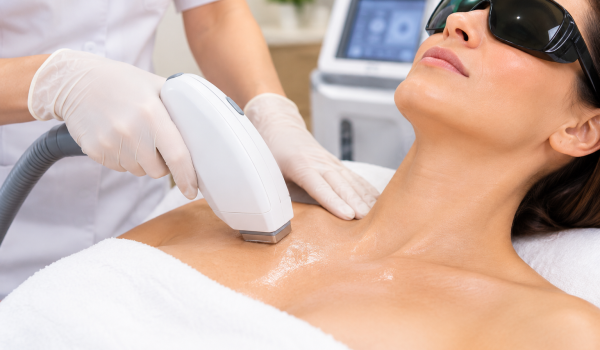
HIFU and radiofrequency treatments are the most effective non-surgical options available for neck skin tightening. HIFU reaches the deeper tissue layers and triggers a genuine structural lift and firming response that develops over three to six months. RF works at the dermal level to stimulate collagen production and produce a progressive tightening effect across the surface of the neck.
At Sharon MediSkin Clinic, these treatments are regularly applied to the neck as part of a broader face and neck lifting protocol. Treating the neck in isolation while leaving the lower face unaddressed tends to produce a disconnected result, so we generally consider the jaw, chin, and neck as a connected zone and treat accordingly.
This is one of the more stubborn concerns in the neck area because the lines run across an area that is constantly moving. A combination of skin needling, which stimulates collagen in and around the line itself, combined with RF for overall skin quality improvement, produces the most meaningful improvement for established neck lines. Results are gradual and progressive but they are real.
The chest responds extremely well to laser treatment for pigmentation and to chemical peels for surface texture and tone. Because the skin here tends to be very sun-damaged rather than structurally aged, the clearance of brown spots and the improvement in overall skin tone from a course of treatments can produce a very satisfying result that makes the whole chest area look significantly younger and more even.
It is worth noting that the décolletage does require more care post-treatment than the face, particularly around sun protection, because it continues to receive significant UV exposure even in everyday life. SPF applied to the neck and chest daily is not optional once treatment begins. It is what makes the results last.
Honestly, earlier than most people do. The conversation about neck and décolletage care should start at roughly the same time as the conversation about facial skin care, not ten years later when the difference between the two is already significant.
That said, if you are reading this and the gap is already there, starting now is still absolutely worthwhile. The skin in these areas responds to treatment regardless of when you begin. You will not undo twenty years of sun exposure in a single session, but you will make a real and visible difference over a course of treatments, and you will stop the further accumulation of damage going forward.
October in Sydney is a particularly sensible time to start treatment in this area. UV is rising but has not yet peaked, which gives you a small window to begin a course of pigmentation or laser treatment before the UV index makes treatment in this zone more complicated. Skin tightening treatments like HIFU and RF can be done year-round, so there is no bad time for those.
Start applying your skincare and SPF to the neck and chest every single day, not just the face. This sounds small. It is not. Years of consistent protection and hydration in these areas make a genuine, measurable difference to how the skin holds up over time.
And if the concern is already there and you want to do something more meaningful about it, come and see us.
Sharon MediSkin Clinic is at Shop 3, Ground Floor, 265 Castlereagh Street, Sydney NSW 2000. A consultation with Sharon will give you an honest picture of what you are working with and what a realistic treatment plan looks like for your neck and décolletage specifically.