
At Sharon MediSkin Clinic, the most common question in a pigmentation consultation is not about price. It’s about which laser actually works, because most clients walking in have already tried something that didn’t work.
Pigmentation isn’t one condition and this guide covers the range most clients ask about: sunspots, freckles, post-acne marks, and general sun damage. If melasma is your specific concern, particularly on Asian skin, we’ve covered that in more depth in a separate guide, since it behaves differently and needs its own approach. This piece looks at how Pico laser handles the broader, more common pigmentation concerns Sydney clients bring in.
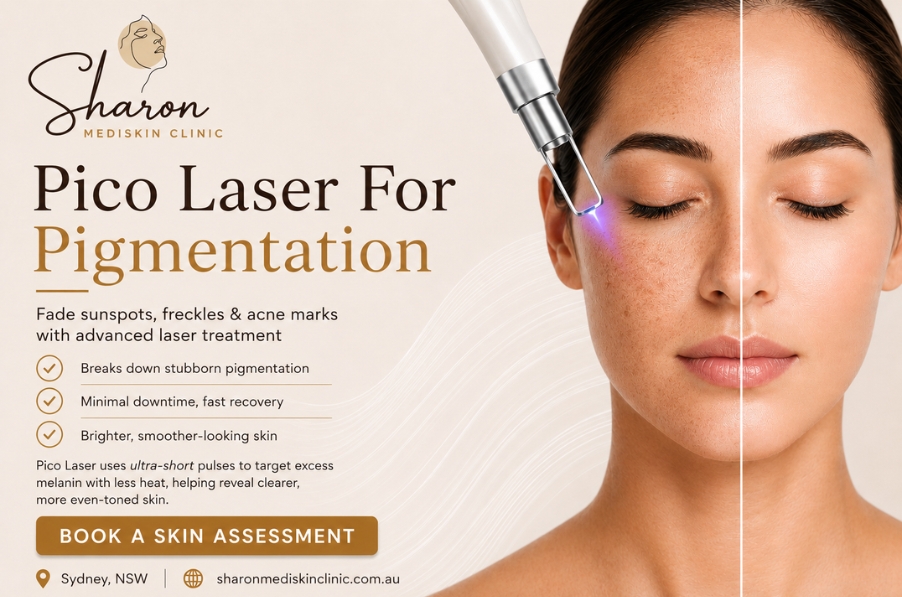
Pigmentation is a catch-all term for any darkening or unevenness in the skin caused by excess melanin, the pigment that gives skin and hair its colour. Melanin itself protects the skin from UV damage, so it’s not the enemy. The problem is when it’s produced unevenly, leaving behind marks that don’t fade on their own.
A few forms come up constantly in consultations at the Sharon MediSkin Clinic.
Older Q-switched lasers rely on heat to break down pigment, which works but carries some risk of rebound discolouration, especially with repeated sessions. Pico laser uses ultra-short picosecond pulses instead, also marketed under names like PicoSure depending on the manufacturer, breaking pigment apart mechanically rather than with heat. We’ve gone into the full science of how that protects against post-inflammatory hyperpigmentation in our melasma guide. For sunspots, freckles, and acne marks, the practical upshot is simply faster clearance with less irritation along the way.
After treatment, the body’s own immune system clears away the fragmented pigment over the following weeks. Treated spots often look slightly darker before they fade and flake off, which can look alarming if you’re not expecting it, but it’s a normal sign the treatment is working.
Sunspots tend to be the most straightforward to treat with Pico laser, since the pigment usually sits closer to the surface. Most clients see visible fading after the first or second session, with one to three sessions clearing the majority of spots in an area like the cheeks or hands.
Freckles respond similarly, though clients often choose to fade them partially rather than completely, since some prefer keeping a lighter version rather than an even, freckle-free result.
Post-acne marks generally need a few more sessions than sunspots, since the discolouration can sit slightly deeper, but the improvement is usually steady and noticeable session by session rather than an all-or-nothing result.
This comes up almost as often as sun damage. Post-inflammatory hyperpigmentation from acne can sit on the skin for years if left untreated, long after the breakout itself has cleared. Pico laser targets these marks the same way it targets sunspots, by breaking down the excess melanin and prompting the skin to renew itself faster than it would on its own.
Combining laser treatment with a skin peel is sometimes recommended for clients dealing with both pigmentation and textural acne scarring, since the two approaches address slightly different layers of the problem.
Ready to treat pigmentation at the source?
Book your personalized skin assessment at Sharon MediSkin today.
Treated skin goes through an active repair phase for some time after a session, which makes it more reactive to UV than usual. For that reason, most pigmentation treatments, Pico laser included, are easier to manage during the cooler months when Sydney’s UV index is lower. It’s a practical detail worth knowing, even if it’s not the only reason to book in.
A typical pigmentation consultation at Sharon MediSkin Clinic starts with a full skin assessment, mapping out where the pigmentation sits and how deep it goes, before recommending a laser protocol suited to that specific case. Treatment sessions generally run 30 to 60 minutes. Mild warmth and some redness afterward are normal and settle within a few hours, and most clients are back at work the same day.
A few things matter more than people expect after treatment. Daily SPF 50, even on overcast days, since UV passes through cloud cover regardless of how the weather looks. Avoiding retinol and other active exfoliants until the skin has settled.
Sticking to gentle, hydrating products that support the skin barrier while it recovers. And steering clear of saunas, steam rooms, or very hot showers for a few days, since heat can aggravate freshly treated skin.
Whether the concern is years of accumulated sun damage, stubborn marks left behind from old breakouts, or freckles you’d like softened rather than removed, an assessment with Sharon Kim’s team will identify what’s actually causing the pigmentation and whether Pico laser is the right tool for it.
Book a skin assessment at Sharon MediSkin Clinic in Castlecrag to find out what’s possible for your skin.